How Often Should You Get a Dental Cleaning and Why It Matters
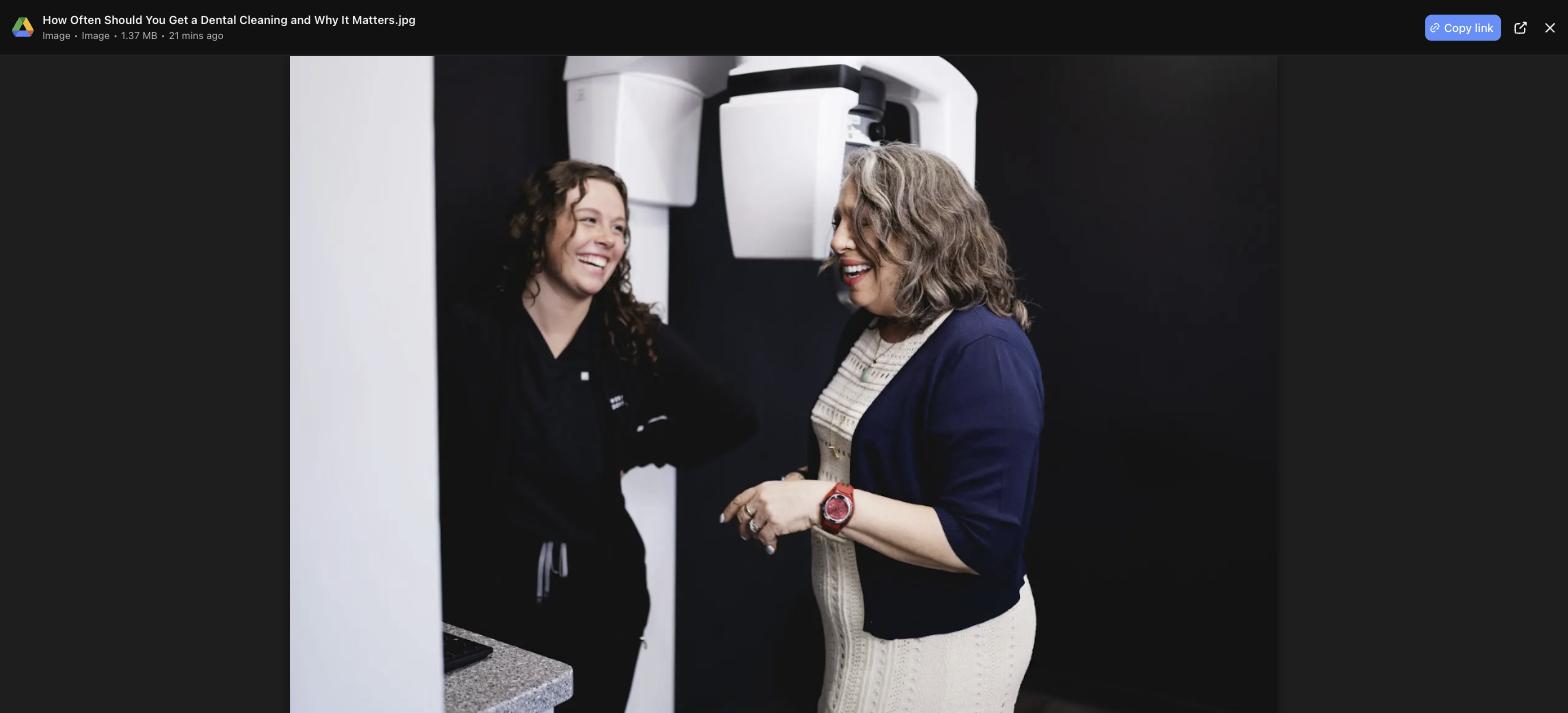


When it comes to how often you should visit the dentist, twice a year is the number most people grew up hearing, and for a lot of mouths that holds up fine.
But the six-month interval was never meant to be a universal rule. It's a starting point—an average. What your gums, your saliva, your bite, and your overall health are doing matters more than the calendar, and Dr. Brandon Prior and the team at 100 West Dental in Ballwin would rather set your schedule around that than around an average rule.
A routine cleaning and exam is where that conversation starts, and if gum disease is already in the picture, periodontal treatment may need to come first. If you're due or overdue for a dental visit, give us a call at (636) 585-0100 and we'll sort out what interval actually fits you.
Where the "every six months" rule came from, and why we don't stop there
Six months is a reasonable average for a population. It is not a diagnosis. Plaque turns into tartar at different speeds in different mouths, depending on saliva chemistry, diet, medications, how your teeth are arranged, and how your immune system responds to bacteria along the gumline. Two people can brush with identical discipline and sit in very different risk categories.
That's why our evaluation looks deeper than any one thing that brought you in. We assess risk across four areas: periodontal and infection risk, biomechanical risk (how prone your teeth are to decay and structural damage), bite risk, and esthetic risk. Your cleaning interval falls out of that picture. Someone with pristine gums and a low decay history genuinely may not need to come in more than twice a year. Someone with pocketing around their molars and a dry mouth from blood pressure medication is a different conversation entirely. That's where gum disease treatment becomes part of the plan rather than a routine cleaning.
How to tell which schedule is yours
Every six months is likely enough if
Your gums don't bleed when you floss, your pockets measure in the healthy range, you've had few or no cavities in recent years, you're not on medications that dry your mouth, and your last few cleanings turned up very little buildup. Stability over time is the signal we're reading. One good checkup doesn't set the schedule; a pattern does. A routine cleaning and exam at our Ballwin office gives us the measurements we need to confirm that pattern is holding.
Every three to four months makes more sense if
- You have a history of gum disease. Periodontal bacteria repopulate pockets on a roughly 90-day cycle, so waiting six months hands them a long, uninterrupted head start.
- You build tartar quickly. Some people deposit heavy calculus behind the lower front teeth within weeks, no matter how well they brush.
- Your mouth runs dry. Saliva is your natural rinse and your mineral supply, and many common medications, mouth breathing, and some medical conditions cut it back enough to raise decay risk sharply.
- You have diabetes or another inflammatory condition. The relationship runs both directions: gum inflammation makes blood sugar harder to control, and poorly controlled blood sugar makes gum disease worse.
- Invisalign trays or other appliances add surfaces, and every added surface gives plaque another place to hide.
- Tobacco use reduces blood flow to the gums, which masks bleeding and lets disease advance quietly.
- Hormonal changes in pregnancy can make gums react dramatically to the same amount of plaque.
When a routine cleaning isn't the right appointment at all
If active gum disease or gingivitis is present, scaling above the gumline won't resolve it. The infection lives in deeper pockets, and it needs periodontal treatment first. Once things are stable, many patients move onto a periodontal maintenance schedule rather than back to a standard six-month cleaning. We'd rather tell you that plainly than polish your teeth and send you home with the real problem untouched.
What actually happens during a cleaning
It's easy to think of a cleaning as a scrub and a polish. The scrubbing part matters, but half the value is in what gets noticed while we're in there.
Measuring and assessing your gums
Before anything gets cleaned, we check the depth of the space between each tooth and the gum tissue, note where there's bleeding, and look at recession and tissue tone. These numbers are what tell us whether your current interval is working. Pockets deepening over two visits is information you can act on early, long before anything hurts. If the measurements point to active infection, we'll talk through gum disease treatment before moving ahead with a routine cleaning.
Removing plaque and tartar
Plaque you can brush off. Tartar, once it hardens, is cemented to the tooth and has to be removed with instruments and ultrasonic scalers. It matters because tartar is porous and holds bacteria right against your gumline, keeping the inflammation going. Removing it is the part no home routine can replicate.
Polishing and finishing
Polishing smooths the tooth surface and clears surface stain, which also makes it marginally harder for new plaque to grab hold. Flossing afterward clears anything loosened between the teeth.
Imaging and screening
X-rays are taken as needed, typically bitewings annually and a full-mouth series every few years, because decay between teeth and bone loss around roots don't show up by looking. We also screen for early signs of oral cancer using OralID, which uses fluorescence to make abnormal tissue easier to spot than a visual exam alone. Oral cancer caught early is a very different situation from oral cancer caught late.
The conversation at the end
This is where we tell you what we saw and what, if anything, to do about it, without a lecture about your flossing. Non-judgmental is a value here, not a marketing word. People avoid the dentist because they expect to be scolded, and shame has never cleaned a single tooth.
What skipping cleanings actually costs you
The damage from a missed interval isn't dramatic. It's cumulative, which is exactly what makes it easy to ignore.
Tartar accumulates in places your brush can't reach and keeps the gum tissue irritated. Irritated tissue pulls away from the tooth, creating deeper pockets that collect more bacteria, which deepens the pockets further. At some point the bone supporting the tooth starts to recede, and bone loss doesn't grow back on its own. Teeth that could have been saved with a cleaning and some attention become teeth that need periodontal therapy, then bone grafting, then replacement with dental implants.
The same slow math applies to decay. A small spot of demineralization can often be arrested or filled conservatively. Left for two or three years, it reaches the nerve, and now you're discussing a root canal and a crown. Conservative, tooth-preserving dentistry depends entirely on catching things while they're still small. That's the whole point of showing up before anything hurts.
Why your gums matter to the rest of your body
Gum disease is a chronic bacterial infection producing constant low-grade inflammation, and that inflammation doesn't respect the boundary of your mouth. Research has linked periodontal disease to cardiovascular disease, difficulty controlling diabetes, and systemic inflammatory conditions.
The mechanisms are still being studied, but the association is consistent enough that we treat periodontal risk aggressively rather than monitoring it indefinitely. That's why gum disease treatment is a priority when we find it, not something we revisit at your next visit.
This is the practical side of functional dentistry: your mouth is connected to everything else, so a cleaning interval isn't just about keeping teeth white. It's one of the few regular, low-cost things you can do to reduce a source of inflammation in your body. For patients managing diabetes or heart conditions, tightening up the cleaning schedule is one of the more concrete adjustments available — and it starts with knowing where your periodontal numbers actually stand.
Common questions
My teeth feel fine. Do I still need to come in?
Gum disease and early decay are both famously painless. By the time something hurts, the problem has usually been developing for a while. Feeling fine is good news, not evidence. A routine cleaning and exam catches what you can't feel yet.
Does more frequent cleaning damage enamel?
No. Modern scaling and polishing are designed to remove deposits, not tooth structure. The real threat to your enamel is the acid produced by bacteria sitting in plaque and tartar. When that bacteria has already taken hold below the gumline, gum disease treatment is the next step.
I haven't been in for years. Is it too late?
It isn't, and you won't get a hard time about it. We'll take a full look, tell you where things stand, and lay out a plan in the order that makes sense. Plenty of people restart after a long gap. Dr. Brandon Prior, Dr. Andrew Hartman, and Dr. Sara Corrigan all see new patients at our Ballwin office, and no one will give you a hard time about the gap.
What if I don't have dental insurance?
We accept many major plans including Aetna, Delta, Cigna, MetLife, and Guardian. For patients without coverage, our in-house 100 Club VIP Membership covers two exams, two cleanings, fluoride treatments, oral cancer screenings, necessary x-rays, and an emergency visit, with a discount on other treatment. It isn't insurance; it's a prepaid membership for care done here, with no deductibles or annual maximums.
Let's figure out your ideal interval for dental cleanings
Whether that turns out to be every six months, every three, or something in between, the point is that it's based on your actual mouth rather than a default. We'll measure your gums and walk you through what the numbers show during your exam.
Then we'll separate what needs attention now from what we can simply keep an eye on, whether that means gum disease treatment or just a closer look at the same spot next visit.
Call 100 West Dental at (636) 585-0100 to get on the schedule. We're at 13759 Manchester Road in Ballwin, and we see patients from across the St. Louis area.
You can also request an appointment online if that's easier.
