Implant-Supported Bridges in Ballwin, MO

Implant-Supported Bridges in Ballwin, MO
If you're missing several teeth in a row, an implant-supported bridge gives you back a full, steady set of teeth without touching the healthy ones on either side. Dr. Prior and the team at 100 West Dental in Ballwin anchor the bridge to dental implants set right into your jawbone, so the restoration holds its own and your neighboring teeth stay exactly as they are.
That's the real difference from a traditional bridge, which files down those healthy neighbors to use them as supports. Here, the implants do the work, standing in for tooth roots and keeping your jawbone active where teeth used to be. If you'd like to know whether this fits your mouth, call us at (636) 585-0100.
Quick Takeaways
- An implant-supported bridge replaces several missing teeth in a row, held by implants rather than your natural teeth.
- Many multi-tooth bridges rest on two implants, though your case may need more or fewer.
- Because the implants fuse with bone, they help preserve the jawbone volume that's usually lost after teeth go missing.
- A proper evaluation includes 3D imaging, not just a look in the mouth. Ask what your imaging shows about bone health before anyone commits you to a plan.
- If you need more support first, bone grafting may be part of the conversation, and we handle that here.
How Implant-Support Bridges Work
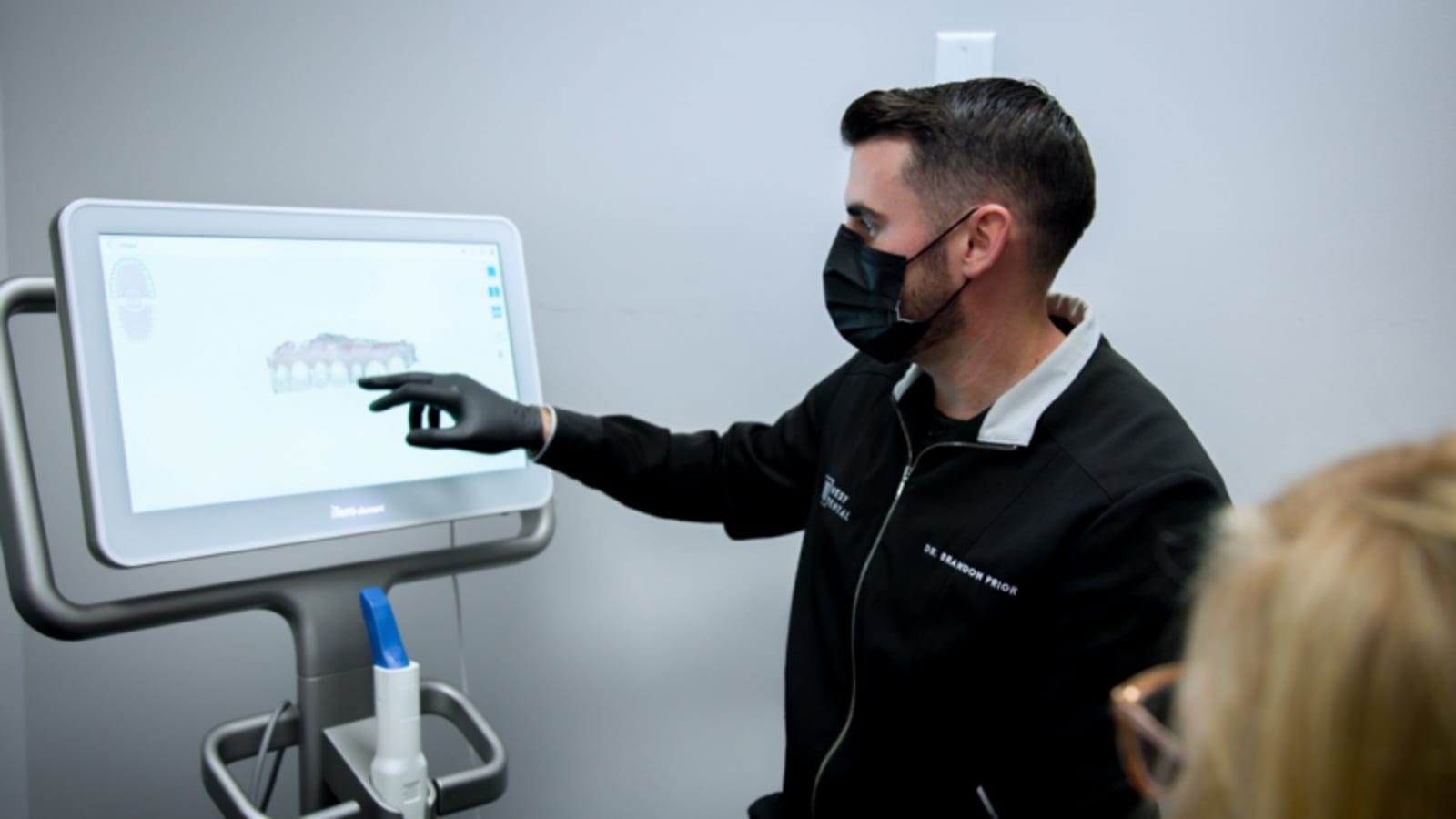
The process runs in three stages, spread across several months so your body can do its part.
- Implant placement. We set the implant posts into your jawbone in an in-office procedure under local anesthesia. Most people feel pressure rather than pain.
- Healing and integration. Over the following months, the implants fuse with your bone in a process called osseointegration. It can't be rushed, and it's exactly what makes implants so sturdy: they become part of your jaw. If you don't have enough bone to start, we may first recommend bone grafting.
- Final bridge placement. Once we confirm the implants have integrated, we attach your permanent bridge and fine-tune it to your bite so it feels natural when you chew and speak.
You won't spend those months with a visible gap. A temporary restoration usually goes in so you can eat and talk while the implants settle. It won't feel quite like the final bridge, but it carries you through until you get the final in.
Why People Choose Implant-Support Bridges
- Your healthy teeth stay whole. Nothing beside the gap gets filed down or crowned.
- It protects your jawbone. The implants stimulate bone the way natural roots do, which helps prevent the sunken look that tends to follow missing teeth.
- It feels stable. Fixed to implants, the bridge doesn't shift or click. You can bite into foods you may have been steering around for a while.
- It blends in. The bridge is shaped and shaded to match your own teeth, following the same esthetic standards we bring to our cosmetic work.
- It's built to last. With good daily care and regular checkups with Dr. Prior or Dr. Hartman, dental implants tend to outlast traditional restorations.
Is an Implant-Supported Bridge Right for You?
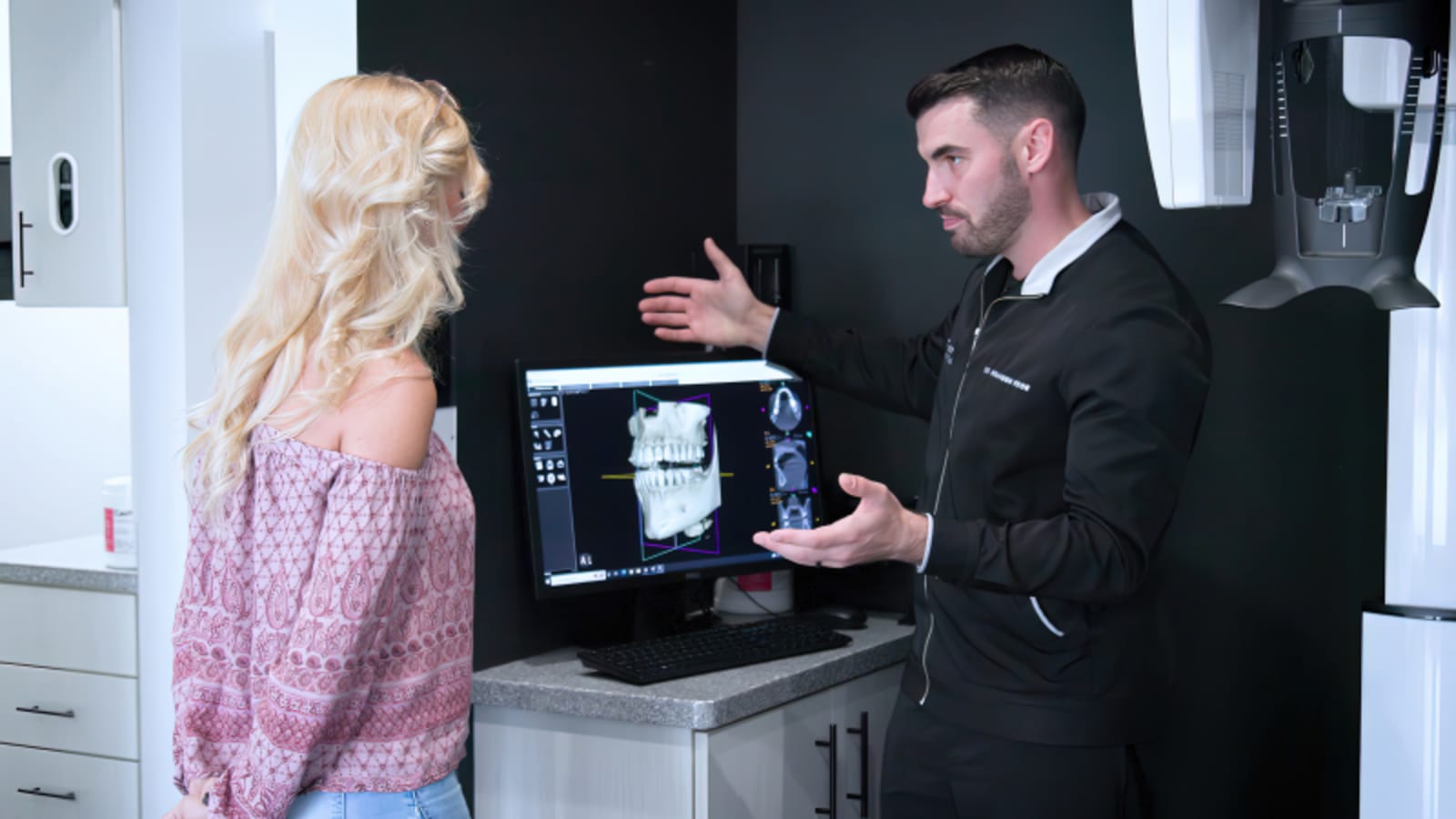
Candidacy comes down to a real diagnostic workup, not a quick opinion. Generally, this approach suits people who have:
- Two or more missing teeth next to each other in the same part of the mouth
- Enough jawbone to hold the implant posts
- Healthy gums with no active gum disease
- No unmanaged health conditions that slow healing, such as uncontrolled diabetes or certain autoimmune disorders
We don't assume candidacy. Imaging and a thorough exam come first, because what they reveal shapes what's actually possible for your anatomy.
Not everyone is an immediate candidate, but that's not a dead end. For some people, a different restorative path fits the situation better, and we'll say so plainly. If active gum disease is part of your picture, we'll treat that before anything else, since healthy gums are the ground implants depend on.
Implant-Supported Bridges Timeline: What to Expect
Plan on this being measured in months rather than weeks, since the implants need time to integrate with your bone. Your exact timeline depends on your bone health, whether you need grafting beforehand, and how your body heals.
At your first visit, we'll review your bone density and overall oral health, then give you a realistic picture of how long your case is likely to take. We block off Fridays for larger cases like this, so complex treatment gets the focused, unhurried time it deserves. Have questions about your timeline? Reach out to our Ballwin team and we'll walk you through it.
Preparing and Caring for Your Bridge
Getting ready is mostly about the evaluation. We'll go over your medical history, current medications, and any habits like grinding that affect how the implants settle.
If you smoke, we'll talk plainly about how that influences healing, because it genuinely matters here. This all fits into the broader functional evaluation we do, where we look at how your teeth work as part of your whole body rather than just the spot that brought you in.
Once your bridge is in, caring for it is close to caring for natural teeth:
- Brush twice a day and clean under and around the bridge, where we'll show you exactly how to reach.
- Keep up with regular cleanings and checkups so we can monitor the implants and the gums around them.
- Go easy on very hard foods early on, then return to your normal diet once you're cleared.
- Tell us right away if anything feels loose or sore, so we can catch small issues while they're still small.
Cost, Insurance, and Financing For Implant-Supported Bridges
The total for an implant-supported bridge depends on a few things specific to you:
- How many implants are placed
- The size and design of the bridge
- Any prep work, like bone grafting or extractions, that turns up during your evaluation
Since those pieces vary, a real number comes from your consultation rather than a generic estimate. We give you a clear, itemized breakdown once we've reviewed your situation, so you know what you're paying for and why.
On insurance, plans often treat the surgical and restorative phases differently. Implant surgery may not be covered, while the bridge itself can sometimes earn partial benefits under your restorative coverage.
We accept many major plans, including Aetna, Delta, Cigna, MetLife, and Guardian, and we'll review your specific benefits with you. To see the full list of accepted insurances, visit our Be Our Guest page.
Whether you're uninsured or looking for a simpler alternative to traditional coverage, our in-house 100 Club VIP membership is another route worth asking about, and it includes 15% off general treatments like crowns and bridges.
Why Ballwin Patients Trust Us With This
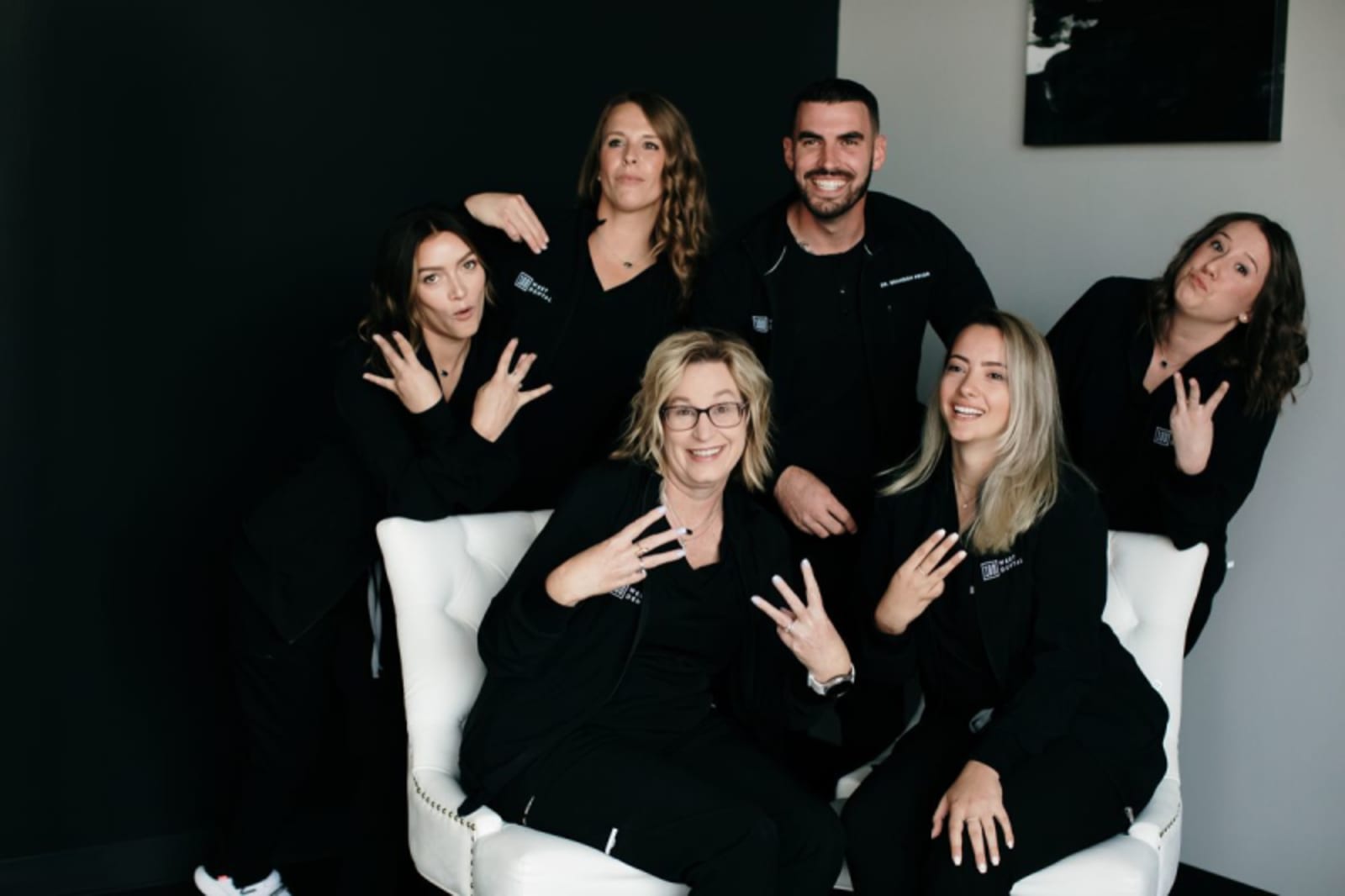
Dr. Prior trains other dentists in implant surgery as a key opinion leader with Biotech Dental, and he logs hundreds of hours of continuing education every year in implant and advanced restorative work. That depth shows up in how carefully a case like yours gets planned.
It shows up in the technology too. We use Cone Beam 3D imaging to map your bone before anything is decided, so a recommendation is grounded in what's actually there, not a guess from a flat X-ray. Our whole-health approach means we weigh your bite, your gums, and your overall health, not just the gap in your smile.
The result is findings explained in plain language, treatment recommended only when the evaluation supports it, and no rush to decide on anyone's timeline but yours.
We serve patients across Ballwin and the wider St. Louis region, and that considered, steady style is what people come to us for. Reach out to our team whenever you're ready to talk it through.
Frequently Asked Questions
How is an implant-supported bridge different from a traditional bridge?
A traditional bridge anchors to the natural teeth beside the gap, which means those teeth get filed down to hold it. An implant-supported bridge anchors into the jawbone instead, so your healthy neighbors stay exactly as they are.
How many implants will I need?
It depends on where the gap sits and what your jaw can support. The amount and density of bone in that spot, plus the load your bite places on it, shape how many posts we recommend. That's why imaging comes before any firm number, and why planning always starts with a close look at your individual anatomy. Our team at our Ballwin practice will walk you through what your imaging shows.
Will I be without teeth while it heals?
Usually not. As covered earlier, we place a temporary restoration while the implants integrate, so you won't spend those months with a visible gap.
Does the procedure hurt?
The placement is done under local anesthesia, and if you tend to feel anxious, oral conscious sedation is available to keep you comfortable. Afterward, some soreness in the following days is normal and usually settles with over-the-counter relief.
How long does an implant-supported bridge last?
Longevity leans heavily on things you can influence, like daily cleaning and keeping up with checkups, alongside factors like your bone health. The research on implants is encouraging, and the day-to-day care you give yours is what carries that promise forward.
What if I don't have enough bone?
That's common, and it isn't the end of the road. A bone graft can build up an area where there's almost enough, and implants can often be angled to use the bone you do have. Your imaging tells us which path makes sense.
Let's Find Out If This Is Right for You
The natural next step is sitting down with someone who can look at your imaging, your bone structure, and your health history, then give you a straight answer. Dr. Brandon Prior and Dr. Andrew Hartman will walk through your candidacy with you before anything is decided.
If implants are a strong fit, you'll understand exactly why. If another path suits your situation better, we'll tell you that too. Our team in Ballwin evaluates every person individually, so the recommendation you get reflects your whole health, not a one-size-fits-all script.
When you're ready, call us at (636) 585-0100 to set up your consultation.
More Information Coming Soon...
